Wednesday, February 20, 2013

SCUBA GEAR II - REGULATOR

A scuba diving regulator is the piece of equipment that enables a diver to breathe from a scuba tank.The compressed air inside a scuba tank is at an extremely high pressure, which could injure a diver who tries to breathe directly from the tank. A regulator reduces the pressure of the compressed air a diver breathes. 
In its most basic form, a scuba regulator consists of two parts, a mechanism that accomplishes the first stage of pressure reduction from the pressure in the tank to an intermediate pressure (called a first stage) and a mechanism that accomplishes the second stage of pressure reduction from the intermediate level to a pressure the diver can breath(called a second stage).


All modern scuba diving regulators have the following features


  • First stage – Attaches to the scuba tank valve. The first stage reduces cylinder air pressure to an intermediate pressure and routes it to several hoses.
  • Second stage – At the end of a hose is the mouthpiece you breathe through. The second stage reduces the intermediate pressure air to the exact pressure you need for breathing comfortably.

  • Alternate second stage – This is just like the one you breathe from, but provides an easy way to share air in case you need to help your buddy. Sometimes the alternate second stage is built into the inflator on your BCD  

  • Low pressure hose(s) – These hoses supply air to your BCD (and dry suit if you’re using one) so you can inflate it to increase your buoyancy.

  • SPG (Submersible Pressure Gauge) hose – Sends air to your SPG so you always know how much air you have left in your tank.  


Optional Features of a regulator:
  • Adjustable second stage – Breathing characteristics change during a regulator’s maintenance cycle. This allows you to fine-tune breathing so it’s always at its best.
  • Dive-predive switch – Some regulators are so sensitive that they can free-flow when they’re not in your mouth. This just means they have runaway air flow, which is easy to stop but annoying. This switch makes your regulator temporarily less sensitive so it doesn’t free-flow when you’re not using it.
  • DIN or Yoke – Regulators and tank valves are either DIN (regulator screws into valve) or yoke (regulator bracket slides down over valve). You’ll choose this based on which is most common where you dive.
YOKE Regulator
DIN Regulator


  • Super Flexible Hoses—a nice option to easily pack and fit your regulator into your scuba gear bag. 

The Scuba Regulator is a vast subject that we can talk and talk for several pages, we did tackle in this post a basic information regarding scuba diving recreational Regulators.


Thursday, March 1, 2012

Zenobia Ban has been removed!!!!

UPDATE: on March the 2nd Larnaca port authority has declared that the ban that they wanted to Put on diving the Zenobia and other dive site within Larnaca Port Area has been removed.

"Following pressure from diving and other bodies connected with tourism, a meeting was convened for today in Nicosia, to include the Cyprus Ports Authority, Cyprus Dive Center Association (CDCA),Cyprus Tourist Organisation, Coastal Passenger Boats Union, Marine Police and Department of Search and Rescue."

For all buddies!!! Happy Zenobia Diving :)
=======================================================================

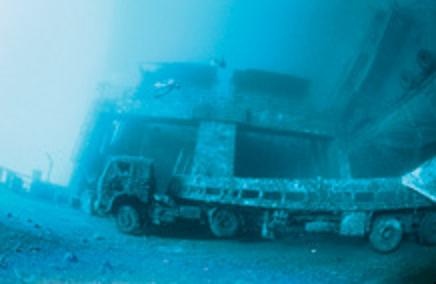
The 178 Meters Ro-Ro vessel that has sunk near Larnaca harbor in 1980 , the Zenobia. Was considered the best diving site in Cyprus.(you can check the post dedicated to the Zenobia HERE).
why am i using the past tense?? Because larnaca port authorities have banned the dive on the Zenobia.
What is the problem?

 According to larnaca port authority general director "Yiannakis Kokkinos" said that the family of a woman who died while diving in 2010 considered legal action against port authorities.
Catherine Vicar "33" was found unconscious in the engine room of the Zenobia shipwreck in October 2010. She had Separated from her group and ran out of Air while underwater.
The result is that the Port of Larnaca Authority has decided to ban diving in port waters for "Legal Reasons" - and the port waters include the wreck of the Zenobia.


What are the port authority of Larnaca Saying???
the head of port authorities, Chryssis Prentzas said they had no choice but to ban diving in port water.
"Until those interested get the necessary licences, port authorities will not allow diving" Prentzas said
"It is the Cyprus Port Authorities (CPA) social obligation to ensure all members of the public who do this will do so withing the context of health and safety" Prentzas said.
CPA have evoked legislation dating back to 1973 and says that anyone swimming or diving anywhere that falls within its jurisdiction (3 nautical miles) needs a license.

Solution???
Now it is not clear how licenses will be given, nor if their will be any change on the legislation...
The Tourism Development and Promotion of Larnaca Association, Larnaca Municipality and CDCA and other involved parties have asked the port authorities to lift the ban, at least until the options has been discussed.
Until the mess gets sorted out , diving the Zenobia is from the Past... 

Monday, November 28, 2011

Scuba Gear I - BCD

What is a BCD or Buoyancy Compensator Device?

It is what all people call the jacket that scuba divers wear it mainly have few basic functions:
  • It contains an inflatable bladder which you can add or subtract air from, allowing you to change your buoyancy in the water.
  • The dive cylinder is attached to the back of the BCD using a tank strap.
  • It allows the diver to carry or attach all of their accessories using its inbuilt pockets and D-Rings.
a more scientific definition ...
It is simply an air bladder that you can inflate or deflate to insure a good buoyancy throughout your dive depending on the depth you are in.
The BCD is a mandatory piece of safety equipment that every scuba diver must have. 

BCDs started out as simple life jackets designed to make a diver float face-up on the surface. They then morphed into front-mounted "horse collar" vests that tended to put divers off-balance and were hard to blow up. Today, BCs have evolved into ever more complex multi-functional systems that do all sorts of things other than just providing the proper buoyancy while diving and acting as safety flotation devices when a diver is on on the surface waiting for a pickup.

Type of BCDs 

There are a variety of different types of BCDs, each type affects underwater movement, buoyancy control and floating behavior and your ability to carry things. These different types are mainly split into 2 main categories;
Back mount BCD also called Wing or Back Flotation Jackets  have their bladders located on the back to the left and right of the tank this leave the front area uncluttered which makes the BCDs popular with photographers , technical divers, back mounts provide good stability.
vers.
Stabilizing Jackets or Vests allow air to move anywhere inside the jacket , air will gather at the highest point and therefore provide a good stability.  Stabilizing jackets have natural confortable feel and excellent buoyancy and are the best choice for most of recreational divers.


What does a BCD contain?

 Air bladder - Air bladders are made of very durable urethane plastic/polyethylene. Some designs have just a single bladder of various shapes and designs, whereas others use a twin-bag system where the inner polyethylene bladder can be replaced if it breaks or springs a leak. In twin-bag designs, the outer layer isn't necessarily a bladder; it primarily serves to protect the inner bladder. Twin-bag designs are usually heavier and bulkier and thus less convenient to transport.
Power inflator - This is a low-pressure direct feed tube from the first-stage regulator. You press a button to pump more air into the suit. Some power inflator systems have their own separate air source which might even also serve as a backup air supply. Some BCs have/had carbon dioxide cartridges for emergency inflation at the surface. These present a risk of accidental inflation and are no longer available in the US.
Oral inflator -- An inflator hose attached to the diver's left shoulder that lets you inflate the BC via blowing into a mouthpiece.
Dump valve - This is to let air out of the BC and is usually located on the left shoulder where the inflator hose is. The valve is actuated by pulling a cord. Some BCs have two or more dump valves, and they can be in varying locations.
Pressure release valve - This valve is there to keep the BC from bursting due to overinflation, which could happen if it is left sitting in the sun or during ascent. The pressure release valve and the dump valve are often combined into a single system.
Cylinder mount - Most current BCs include a tank mount in sort of a backpack type of design. The heavy cylinder is secured by strong nylon webbing and a strap with a locking buckle.
Waistband - That's the usually fairly thick "cummerbund"-style abdominal harness strap that keeps the BC in place.
Integrated weight - Some BCs have pockets for weights, making clumsy weight belts unnecessary. An additional advantage is that weights can quickly be discarded in emergencies. Weights come in different denominations, usually from one to five pounds each. Some have a hard shell whereas others are soft cushions.
Quick-release shoulder straps - Those make it easier to get in and out of the BC.
Pockets - One or more easily accessible zippered mesh accessory pockets to carry all sorts of items.
Accessory rings - Generally located in the front, these stainless steel rings let you clip on additional items.
Hose retainers - If you don't like to have hoses float all over the place, get a BC with clips and Velcro tabs to secure the hoses so you always know where they are and so they won't get in the way or caught.  

Maintenance
Just like all other diving equipements BCDs should be rinsed with fresh water then dried and stored away from sunlight in a dry cool place. However you also need to rinse the inside of the air bladders form time to time, and rinse it from time to time with warm water to dissolve any salt crystal that may have formed inside the bladder.


Tuesday, November 1, 2011

Scuba Gear History

During the month of November we are going to talk about Scuba Diving Gear stating some historical fact, current inventions and description on each and every single part of the Scuba Gears that we use in our dives.
Today's post is a small historical information about the Scuba gear, invention and progress throughout history.

We all use the word SCUBA but do we really know that this is an abbreviation of Self Contained Underwater Breathing Apparatus.
The Scuba Gear that we know nowadays was not the same several years ago... but it was a simple gear that started with:

  • In 1771, British engineer, John Smeaton invented the air pump. A hose was connected between the air pump and the diving barrel, allowing air to be pumped to the diver.
  • In 1772, Frenchmen, Sieur Freminet invented a rebreathing device that recycled the exhaled air from inside of the barrel, this was the first self-contained air device. Freminet's invention was a poor one, the inventor died from lack of oxygen after being in his own device for twenty minutes.


  • In 1825, English inventor, William James designed another self-contained breather, a cylindrical iron "belt" attached to a copper helmet. The belt held about 450 psi of air, enough for a seven-minute dive.


  • In 1876, Englishmen, Henry Fleuss invented a closed circuit, oxygen rebreather. His invention was originally intended to be used in the repair of an iron door of a flooded ship's chamber. Fleuss then decided to use his invention for a thirty-foot deep dive underwater. He died from the pure oxygen; oxygen is toxic to humans under pressure (This is what we call O2 toxicity).
It wasnt before 1942 and thanks to Jacques Cousteau and Emile Gagnant that we have currently what we call a regulator.
Emile Gagnan and Jacques Cousteau invented the modern demand regulator and an improved autonomous diving suit. In 1942, redesigned a car regulator and invented a demand regulator that would automatically fresh air when a diver breathed.


A year Later, they started selling what they call the Aqua-Lung or what we currently call a Regulator, and since this year a new era of Recreational divers started.

So we can say with confidence Thank you Cousteau for giving us what we currently have as Scuba Gears.


Tuesday, October 25, 2011

SS YONGALA

The SS YONGALA is a passenger ship build in England in 1903 and took up the busy passenger road from the gold mines of eastern Australia to the port of Adelaid , Melborne and Sydney.
The Ship sank in a Cyclone in  23 march 1923 and all 199 passenger on board died in what is known the worst marine tragedy in the history of Australia.

IT took 50 years for this Wreck to be found , In 1943 a minesweeper identified an object of around 90 meters (300 feet)  and was probably the wreck of a fair sized steamer vessel  but no further investigation has been done.
In 1958 two divers located the wreck and came up with a steel safe form one of its cabin, no identification from the safe other than the serial number, in 1961 the response from the safe manufacturer in London is received and confirmed that this safe is manufactured for the SS Yongala.

The SS Yongala lies on the bottom of a sandy seabed which makes of it an artificial reef and house of a large array of marine life , from gray nurse shark to rays to the huge number of reef fish , groupers and much more. Not to forget the famous grouper found on the bow of the ship nicknamed VW because of its enormous size.

The best time to dive the Yongala is from June to August where the water temperature are (21 to 25 C ) but the visibility is between (15 to 20 meters) or from September to December where the water temperature are higher (25 to 30 ) but the visibility is lower between (10 to 15 meters).
With a maximum depth of 30 meters, and the great historical and marine life , the SS Yongala is one of the best wreck dives in the world and has on average 10000 + divers each year.

Wednesday, October 19, 2011

McMURDO SOUND , ANTARCTICA


This is a dive that you can call STRANGE, Imagine yourself digging a hole in the Ice to dive ... Needless to say your dry suite should be on... This dive is not for beginners as it needs some special skills to return alive :)


Think about it twice, despite the temperature that usually drops below -40 Degree Celsius , and the strong winds that resulted in a LifeLess land; on the contrary to that the life thrives below the thick layer of ice which makes it a spectacular dives, for the lucky person that can experience it.


Diving can be done during summer, from september to February where the outside temparature is around -2 degree Celsius, the divers will have to dig a hole in the 1 to 3 meters (3 to 10 feet) thick ice using one of the following tools:


Diesel powered auger, ice saws, ice chippers or even high explosives, to make a hole of a diameter of around 1 meter (3 feet), a portable Hut is placed over the whole to prevent it from freezing again and makes a room for diver to wear the suite and prevent the diving equipment from beeing exposed to excess cold that may defect it.


Once in the water the diver will contemplate a visibility of 300+ meters (990 feet) ,once you have your eyes adjusted to the low sunlight that makes it through the ice, you experience of flying over a darkened landscape,


you will also encounter colorful sea life, including Cactus sponges,globe sponges, starfish, sea urchin, sea urchin, jellyfish and some brilliant soft coral., if you are lucky enough you may sometimes encounter an Emperor Penguin swimming to find a meal under the ice.